
Flying Private From Florida’s Panhandle: A Guide to Private Aviation Along 30A and Destin
From 30A
By Devyn Onyango
Florida’s Emerald Coast has become a destination for far more than a traditional beach vacation.
From Destin and Sandestin to WaterColor, Seaside, Alys Beach, Rosemary Beach, and the communities surrounding Scenic Highway 30A, the area attracts business owners, executives, families, and second-home owners from across the country.
For travelers arriving privately, however, one important detail is easy to overlook:
There isn't one airport that makes sense for every trip to the Emerald Coast.
Where you're staying, where you're coming from, aircraft requirements, ground transportation, and the purpose of the trip can all influence the best option.
Understanding the area's airport landscape can make arriving on the Florida Panhandle considerably easier.
Destin Executive Airport
For travelers whose final destination is Destin, Miramar Beach, or nearby communities, Destin Executive Airport is one of the most conveniently positioned options.
Its location places travelers close to many of the area's resorts, residences, marinas, golf courses, and businesses without requiring the longer ground transfer associated with some surrounding airports.
For certain private aviation missions, that proximity can make it particularly attractive.
But convenience shouldn't be measured solely by which airport appears closest on a map. Aircraft capabilities, operational requirements, availability, and the traveler's final destination should all be considered when planning a trip.
Destin–Fort Walton Beach Airport
Destin–Fort Walton Beach Airport serves the broader Destin and Fort Walton Beach area and provides another option for travelers coming into Northwest Florida.
Depending on the mission and operational requirements, the broader airport infrastructure in the region gives private travelers multiple ways to approach the Emerald Coast.
The important part is evaluating the entire itinerary rather than simply selecting an airport based on its name.
Northwest Florida Beaches International Airport
For travelers headed toward the eastern side of 30A, Northwest Florida Beaches International Airport near Panama City Beach can be an important option.
This becomes particularly relevant for destinations such as Rosemary Beach, Alys Beach, Inlet Beach, and other communities along the eastern end of the 30A corridor.
A traveler staying in Rosemary Beach, for example, may have a very different optimal arrival plan than someone staying in Destin.
That's why understanding the final ground destination is an important part of arranging the flight.
Choosing an Airport Based on the Entire Trip
Private aviation is ultimately about making travel more efficient.
That means the planning shouldn't stop when the aircraft lands.
When evaluating airports for a trip to Northwest Florida, several factors should be considered:
Final destination along the Emerald Coast
Aircraft category and operational requirements
Passenger count and luggage
Ground transportation requirements
Arrival and departure schedule
Aircraft and operator availability
Any special passenger or itinerary requirements
Sometimes the closest airport produces the easiest trip.
Other times, an airport slightly farther away can make more sense when the entire mission is considered.
The objective should be to optimize the complete journey, not simply the flight itself.
Private Aviation and the 30A Lifestyle
One reason private aviation fits naturally into the 30A market is the way many people use the area.
Some are permanent residents. Others maintain second homes and travel between Northwest Florida and major business centers throughout the year.
Families may arrive for several weeks during the summer. Business owners may spend part of the week here and need to return quickly to another city. Others are arriving for holidays, events, golf, fishing, or simply a weekend on the coast.
For these travelers, flexibility can be considerably more valuable than luxury alone.
A flight schedule built around the traveler can turn what would otherwise consume much of a day into a substantially more efficient trip.
The Flight Is Only Part of the Experience
For a well-arranged private trip, the experience shouldn't end at the aircraft door.
Ground transportation, catering, passenger preferences, luggage requirements, changing schedules, and other details can all affect the journey.
Ideally, those elements are coordinated through a single point of contact.
The traveler should be able to explain where they need to go, when they need to be there, and what matters to them.
The complexity should be handled behind the scenes.
A More Personal Approach to Private Aviation
At Palladium Air Group, our approach is built around understanding the individual mission before sourcing an aircraft.
For travel involving Destin, 30A, or the surrounding Florida Panhandle, that means considering not only the flight but where the client is ultimately trying to get.
Whether the destination is a home in Alys Beach, a weekend in Rosemary Beach, a property in WaterColor, or a stay closer to Destin, the objective remains the same:
Make the journey feel simple.
Private aviation is at its best when the traveler doesn't have to think about all of the logistics required to make the trip happen.
They simply know they're handled.
Devyn Onyango
Founder & Managing Partner
Palladium Air Group
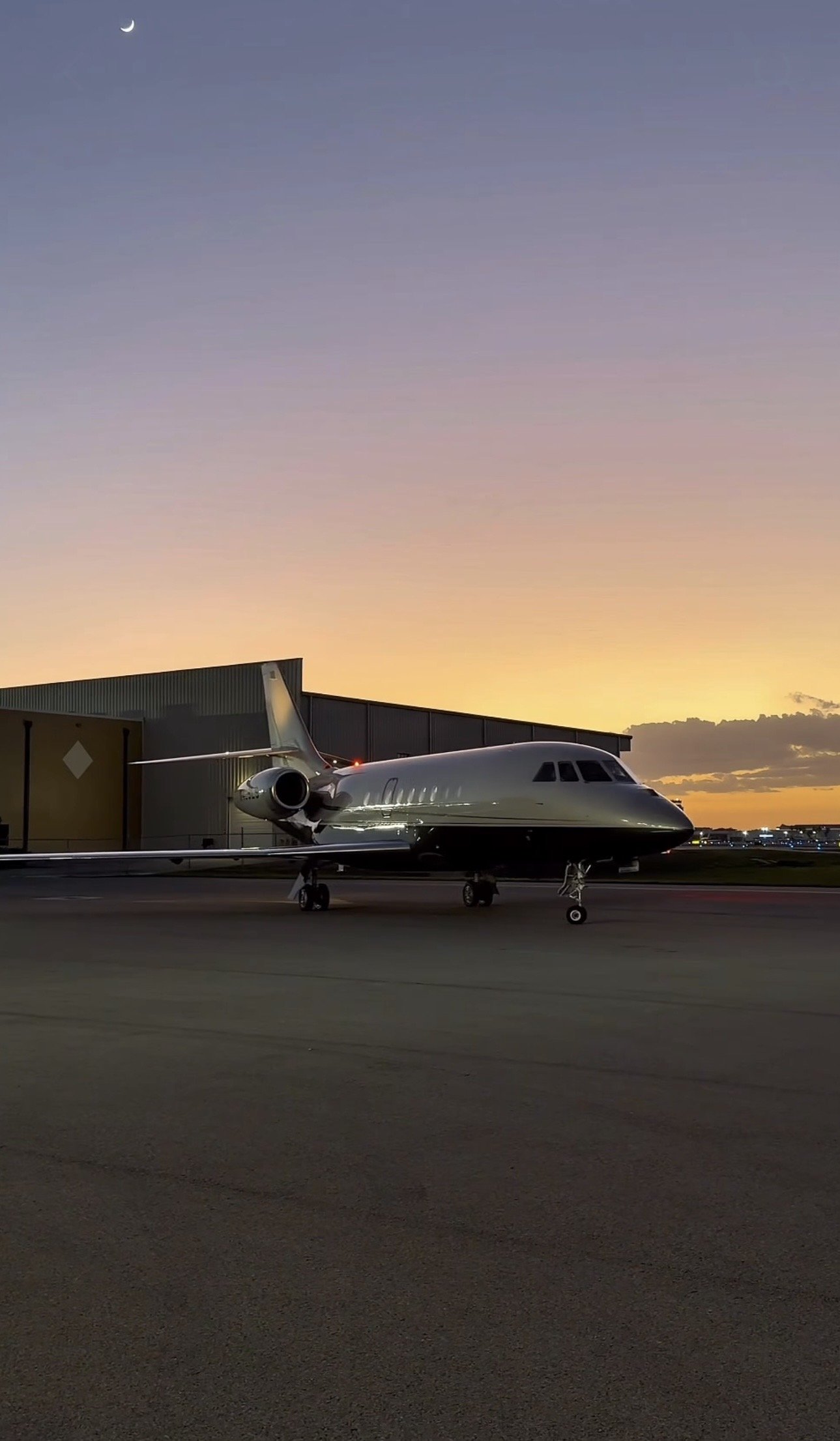
What Actually Determines the Cost of a Private Jet Charter?
The real costs
By Devyn Onyango
Founder & Managing Partner, Palladium Air Group
One of the first questions people ask when considering private aviation is also one of the most reasonable:
How much does it cost to charter a private jet?
The answer isn't as simple as quoting an hourly rate.
Unlike purchasing a commercial airline ticket, private jet charter pricing is based on the requirements of the entire mission. Two trips between the same cities on the same day can sometimes produce noticeably different quotes depending on the aircraft, its location, passenger requirements, scheduling, and market conditions.
Understanding what goes into a charter quote can make evaluating your options considerably easier.
Aircraft Category
The aircraft itself is one of the largest factors affecting charter cost.
Private aircraft generally fall into categories such as turboprop, light jet, midsize, super-midsize, heavy, and ultra-long-range.
Larger aircraft generally cost more to operate, but choosing the right aircraft isn't simply a matter of selecting the smallest option available.
Passenger count, luggage, range, runway requirements, cabin preferences, and the duration of the flight all need to be considered.
For a relatively short trip with a small group, a light or midsize aircraft may be appropriate. A larger group, longer mission, or itinerary requiring additional range may call for a super-midsize or heavy aircraft.
The objective should be to select the aircraft that appropriately fits the mission—not automatically the largest or least expensive option.
Flight Time
Flight time naturally plays a significant role in charter pricing.
Longer trips require more fuel, aircraft utilization, and crew time. But the quoted cost isn't necessarily calculated by simply multiplying the advertised hourly rate by the time between departure and destination.
There may be additional flying required to position the aircraft before your trip or return it afterward.
That's where another major pricing factor comes into play.
Aircraft Positioning
The location of the aircraft can have a substantial effect on a charter quote.
Imagine you're departing from Northwest Florida for New York, but the aircraft best suited for your trip is currently located somewhere else.
That aircraft may need to fly to your departure airport before you ever board it.
This is commonly referred to as repositioning.
Because the aircraft is still operating during that flight, positioning can influence the overall cost of the trip.
This is also one reason two similar aircraft can produce different quotes for the same itinerary. One may already be positioned conveniently for the mission while another requires additional flying.
One-Way vs. Round-Trip Itineraries
The structure of the itinerary matters too.
A round trip doesn't always mean the aircraft simply waits at the destination until you're ready to return.
Depending on the length of the stay, aircraft scheduling, crew requirements, and operator logistics, it may make more sense operationally for the aircraft to leave and another aircraft to handle the return.
Likewise, a one-way trip may require the operator to account for where the aircraft needs to go afterward.
The most efficient solution depends on the individual mission.
Airport and Handling Costs
Private aviation provides access to thousands of airports, but operating costs aren't identical at every airport.
Landing fees, ramp or handling charges, parking, and other airport-related expenses can vary by location and aircraft.
Sometimes using a nearby airport can improve the overall economics of a trip while also placing the traveler closer to the final destination.
This is one reason I believe the entire itinerary should be considered rather than automatically selecting the most recognizable airport.
Crew and Overnight Requirements
Crew logistics can also affect charter pricing.
If an itinerary requires pilots to remain overnight, there may be associated lodging, transportation, and other crew expenses.
Longer or more complex missions can also involve additional operational considerations depending on flight and duty-time requirements.
These details generally happen behind the scenes, but they're part of what goes into properly operating the trip.
Demand and Seasonality
Private aviation is still subject to supply and demand.
Major holidays, sporting events, peak vacation periods, and other high-demand travel dates can tighten aircraft availability.
That can affect both pricing and the number of suitable options available.
The same itinerary flown during a quieter period may therefore look different from one requested during Thanksgiving, Christmas, spring break, or another period of unusually high demand.
When schedules allow, flexibility with departure time—or occasionally the date itself—can create additional options.
Why the Lowest Quote Isn't Automatically the Best Quote
When comparing charter options, it's tempting to focus entirely on the bottom-line number.
Price matters. It should.
But it shouldn't be evaluated in isolation.
The aircraft's suitability for the mission, operator, schedule, cancellation terms, positioning, and overall reliability of the proposed option all deserve consideration.
A lower quote isn't particularly valuable if it introduces unnecessary compromises into a trip that matters.
The goal should be to understand why one option costs more or less than another.
A good aviation advisor should be able to explain that.
Every Mission Is Different
Ultimately, there isn't one universal price for flying privately.
A charter quote is the result of multiple variables coming together around a specific trip.
That's why the most useful starting point isn't necessarily asking:
“What does a private jet cost per hour?”
It's providing the details of the mission:
Where are you departing from?
Where are you going?
When do you need to leave?
How many people are traveling?
Are your dates or times flexible?
From there, appropriate aircraft and charter options can be evaluated around the actual needs of the trip.
At Palladium Air Group, that's how I believe private aviation should be approached.
Understand the mission first. Then find the right solution.
Devyn Onyango
Founder & Managing Partner
Palladium Air Group

From Automotive Sales to Private Aviation: What High-Ticket Sales Taught Me About Client Service
From Automotive to Aviation
By Devyn Onyango
Long before I entered private aviation, I learned about client service from selling cars.
On the surface, automotive sales and private aviation are very different businesses. The products are different, the transactions are structured differently, and the stakes can be dramatically different.
But the higher I progressed in sales, the more I realized that the fundamentals of serving a client rarely change.
People want someone who understands what they are trying to accomplish, communicates clearly, respects their time, and does what they say they are going to do.
Those lessons ultimately became part of the foundation for how I approach Palladium Air Group.
The Product Gets You in the Door. Service Brings People Back.
Early in sales, it's easy to believe the product is everything.
If you have the right car, the right price, or the right inventory, you'll make the sale.
Eventually, you realize the client often has several places they could make the same purchase.
The differentiator becomes the experience surrounding it.
Did you answer when they called?
Did you remember what mattered to them?
Did you communicate when something changed?
Did you solve problems instead of creating additional ones?
Most importantly, did the client feel comfortable trusting you with the transaction?
Those questions matter in automotive sales. In private aviation, where individual transactions can represent substantially larger commitments, they matter even more.
Responsiveness Is Part of the Product
One of the most important lessons sales taught me is that responsiveness isn't simply good customer service.
It's part of what the client is buying.
When someone reaches out about an important transaction, uncertainty creates friction. Even when you don't have the final answer yet, communication matters.
Sometimes the best response is simply:
I'm working on it. I'll update you as soon as I have an answer.
Silence, on the other hand, makes people wonder whether anything is happening at all.
In private aviation, this becomes particularly important. Trips change. Aircraft availability changes. Weather changes. Schedules change.
Clients shouldn't have to chase someone for information.
Learn What the Client Actually Values
Not every client defines value the same way.
One person may care primarily about price. Another cares about convenience. Someone else wants the best available option and doesn't want to spend an hour comparing alternatives.
Good salespeople learn that distinction quickly.
The objective isn't to sell every person the same solution. It's to understand what matters to the individual sitting across from you.
That philosophy translates naturally into private aviation.
The best aircraft isn't necessarily the largest or most expensive one. It's the aircraft that appropriately fits the mission, passengers, schedule, preferences, and priorities of the client.
Good service begins with listening.
Problems Reveal More Than Perfect Transactions
Anyone can look competent when everything goes exactly according to plan.
I think you learn much more about a person when something doesn't.
A delay, misunderstanding, unavailable option, or unexpected complication creates a decision: avoid the problem or take ownership of it.
Sales taught me that clients don't necessarily expect perfection.
They do expect accountability.
If something changes, communicate it. If there's a problem, work toward a solution. If you made a commitment, honor it.
Handled correctly, difficult situations can sometimes build more trust than transactions where nothing went wrong.
Relationships Compound
The greatest value in relationship-driven sales isn't necessarily the first transaction.
It's what happens afterward.
A client comes back. They introduce you to someone. Years later, they call because they trust your judgment even though their circumstances have completely changed.
That's when sales stops feeling transactional.
Your reputation begins working before you ever enter the conversation.
That is particularly important in markets where discretion and trust matter. The higher the value of the transaction, the smaller the world often becomes.
People remember how you conduct business.
Building Palladium Around Those Lessons
When I founded Palladium Air Group, I didn't want the company to simply be another place someone could request an aircraft.
There are plenty of places to do that.
I wanted to build around something more difficult to replicate: relationships.
That means being accessible. Communicating clearly. Paying attention to details. Protecting the client's time. And approaching every interaction with the understanding that the relationship matters more than any individual transaction.
The industries may have changed for me.
The fundamentals haven't.
Products change. Markets change. Technology changes.
Trust, responsiveness, and service don't.
Devyn Onyango
Founder & Managing Partner
Palladium Air Group
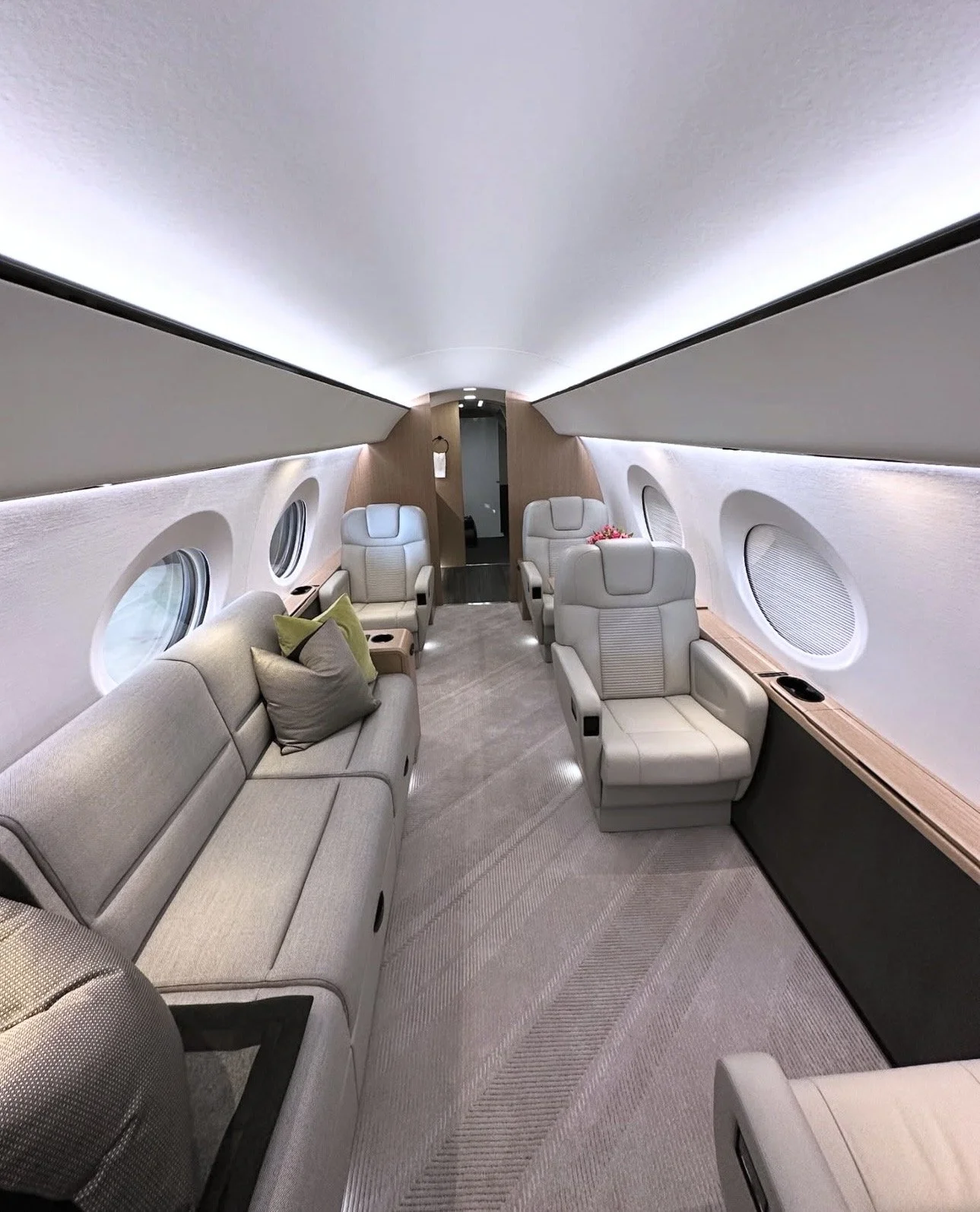
Why Trust Matters More as the Transaction Gets Larger
It All Begins Here
By Devyn Onyango
Founder & Managing Partner, Palladium Air Group
The higher you move in any market, the more options a client tends to have.
They can choose another company, another advisor, another aircraft, or another person to handle the transaction. At a certain level, access to the product itself is rarely what creates a lasting relationship.
Trust does.
I learned this long before entering private aviation.
I began my career in automotive sales at 17. Over the years, working in relationship-driven sales taught me that the value of a transaction changes the way people make decisions. When the stakes are relatively small, price and convenience can dominate the conversation. As the financial commitment, complexity, or importance of the decision increases, the person on the other side of the transaction begins to matter considerably more.
Clients start asking different questions.
Will this person answer when I need them?
Are they giving me the complete picture?
Will they tell me when something isn't the right decision, even if saying so costs them a transaction?
And when something inevitably doesn't go according to plan, will they take responsibility and help solve it?
Those questions are particularly important in private aviation.
Access Is Only the Beginning
There are thousands of aircraft available throughout the charter market and numerous companies capable of presenting a client with flight options.
Access alone isn't enough.
A client's itinerary may involve multiple passengers, changing schedules, repositioning aircraft, international requirements, ground transportation, catering, or a meeting that simply cannot be missed.
The aircraft matters, but so does everything surrounding it.
That is where I believe the value of a trusted aviation relationship becomes apparent.
A good advisor should understand the mission before recommending the solution. The largest aircraft isn't automatically the right aircraft. The lowest quote isn't automatically the best value. And the option that looks best on paper isn't always the option I would want a client relying on when their schedule matters.
Sometimes good service means finding an option quickly.
Other times it means explaining why an option isn't the one I would recommend.
Responsiveness Is Part of the Product
In high-value service businesses, communication isn't separate from the product. It is part of it.
Private aviation is often chosen because someone's time has significant value. A client shouldn't have to repeatedly ask whether their request was received, where their aircraft options are, or what happens next.
Even when there isn't an immediate answer, there should be communication.
I have always believed that one of the simplest ways to earn trust is also one of the most overlooked: answer the phone, communicate clearly, and do what you said you were going to do.
That doesn't require an elaborate philosophy.
It requires consistency.
Discretion Matters
Trust also means understanding that not every client wants attention.
People travel privately for countless reasons. Sometimes it is convenience. Sometimes it is business. Sometimes it is family, security, privacy, or simply the ability to control their schedule.
Whatever the reason, the relationship should remain professional and discreet.
The objective isn't to make the transaction feel important.
The objective is to make the client feel that it is handled.
Relationships Outlast Transactions
A transactional business asks how to complete today's sale.
A relationship-driven business asks how to become the person a client wants to call again.
That distinction has shaped how I think about Palladium Air Group.
I don't want Palladium to be measured solely by the number of flights arranged or aircraft transactions completed. I want the firm to build relationships in which clients know they have someone they can call when they need an aviation solution—and trust that the answer they receive is being given with their interests in mind.
That reputation isn't created through branding or a single successful transaction.
It is earned gradually.
One returned phone call at a time. One problem solved correctly. One promise kept. One situation where doing what is right for the client matters more than completing the transaction.
The higher you move in any market, the more important those things become.
Because clients have options.
What they remember is whether you answered the phone, whether you did what you said you would do, and whether they could trust you when something didn't go according to plan.
That's the standard I want Palladium Air Group to be built around.
Devyn Onyango
Founder & Managing Partner
Palladium Air Group